
How Laboratories Measure Peptide Purity: HPLC and the Meaning of “99%”
Understand HPLC purity, chromatographic peak areas and why a 99% result does not prove identity, amount, sterility or clinical safety.
3 min read · 2 sources→How Scientists Verify Peptide Identity: Molecular Mass, MS and LC-MS
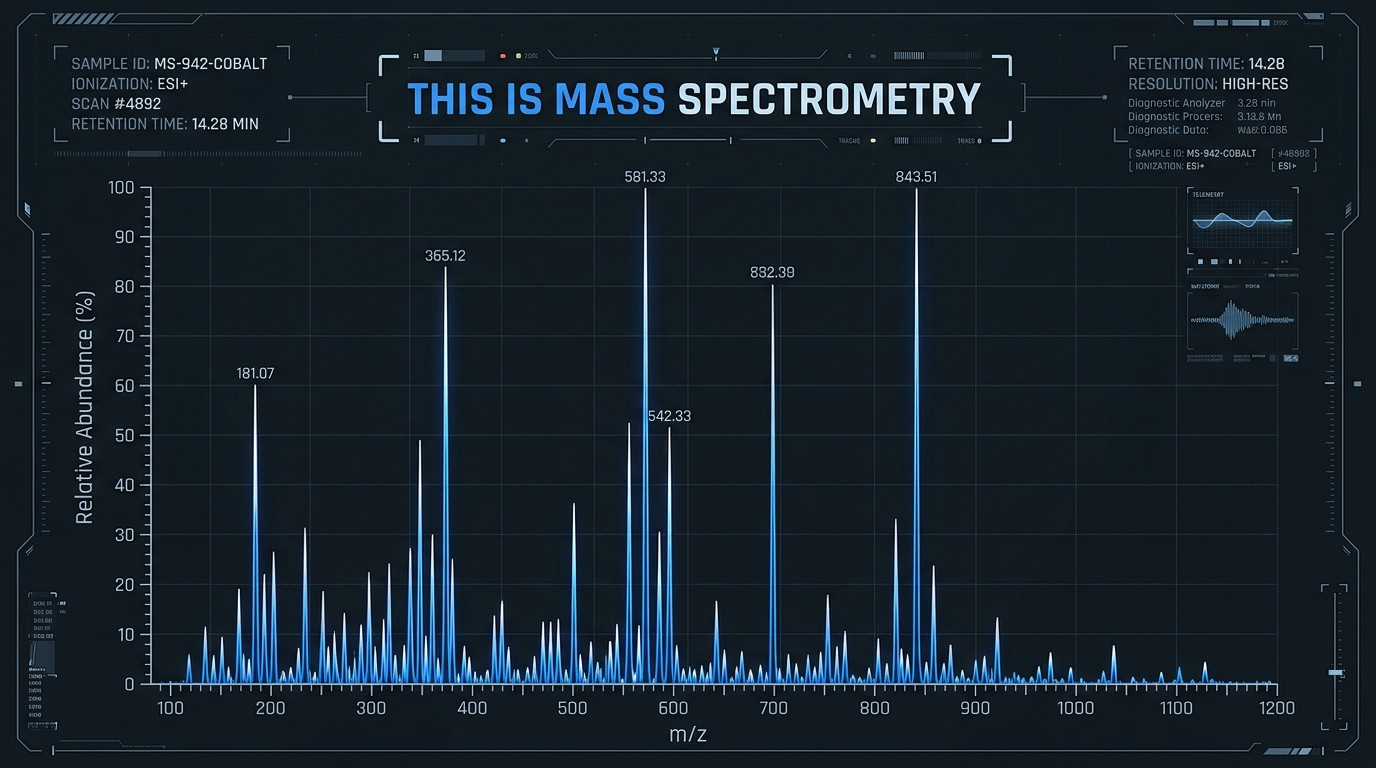
Learn how molecular mass, mass spectrometry and LC-MS support peptide identity, and why purity or a matching mass alone may not settle every question.
3 min read · 5 sources→Understanding a Peptide COA: Authenticity, Lot-Specific Testing and Limits
Learn what a certificate of analysis should document, how to evaluate its connection to a sample or lot, and what it cannot prove.
3 min read · 2 sources→What Is Endotoxin Testing?
Understand bacterial endotoxins, what endotoxin tests measure, and why a result is different from sterility or a general purity claim.
2 min read · 1 source→What Is Peptide Degradation, and How Do Scientists Detect It?
Learn how peptide molecules can change over time, why appearance is unreliable, and how stability-indicating analytical methods detect change.
2 min read · 1 source→How to evaluate independent peptide testing
Independent testing is useful when it answers a defined question about a traceable sample. The phrase “third party tested” is not enough to show what was measured, whether the sample…
2 min read · 2 sources→What pharmaceutical quality claims need to demonstrate
“Pharmaceutical grade” is meaningful only when it is tied to a defined specification, manufacturing context and intended product. Used alone on a research-material label, it can suggest…
2 min read · 2 sources→Why a peptide purity percentage is only one measurement
A peptide purity percentage describes a result under a particular analytical method. It should not be read as a complete inventory of everything in a container. Understanding the…
2 min read · 3 sources→Endotoxin results need a method and a context
Endotoxin testing addresses a particular contamination concern. It is distinct from identifying a peptide, measuring chemical purity or checking for viable microorganisms. A complete…
2 min read · 2 sources→Why a fentanyl free claim needs a defined detection limit
A statement that a material is “fentanyl free” can sound absolute even when the underlying laboratory result is narrower. Analytical testing typically reports whether specified substances…
2 min read · 2 sources→Reading peptide mass spectrometry without overclaiming identity
A mass-spectrometry report can provide important evidence about a peptide, but its conclusion depends on the experiment performed. A matching mass is informative; it is not always a…
2 min read · 1 source→Why a 99 Percent Purity Claim Does Not Describe an Entire Peptide Sample
A purity percentage becomes meaningful only when its measurement is explained. In peptide work, a high-performance liquid chromatography result may describe the relative areas of detected…
2 min read · 2 sources→A Peptide Testing Plan Should Start With the Intended Experiment
Calling a supplier safe compresses several separate judgments into one word. A laboratory needs material that is sufficiently characterized for its experiment. A patient needs an…
2 min read · 2 sources→A Product Code Is Not a Chemical Identity The PS T2 Example
PS T2 is a product-style code, and this review could not independently establish a single authoritative chemical identity for the specific item referenced in the source inventory. That…
2 min read · 2 sources→Country of Origin Is Not a Peptide Quality Test
A country label can help trace a supply chain, but it cannot substitute for product evidence. A company may be incorporated in one country, synthesize material in another, use a third-party…
2 min read · 2 sources→A Purity Percentage Is Only One Part of a Certificate of Analysis
A certificate of analysis is a record of selected measurements on a stated sample or lot. Its value depends on traceability, appropriate methods and clear interpretation. A large purity…
2 min read · 3 sources→