
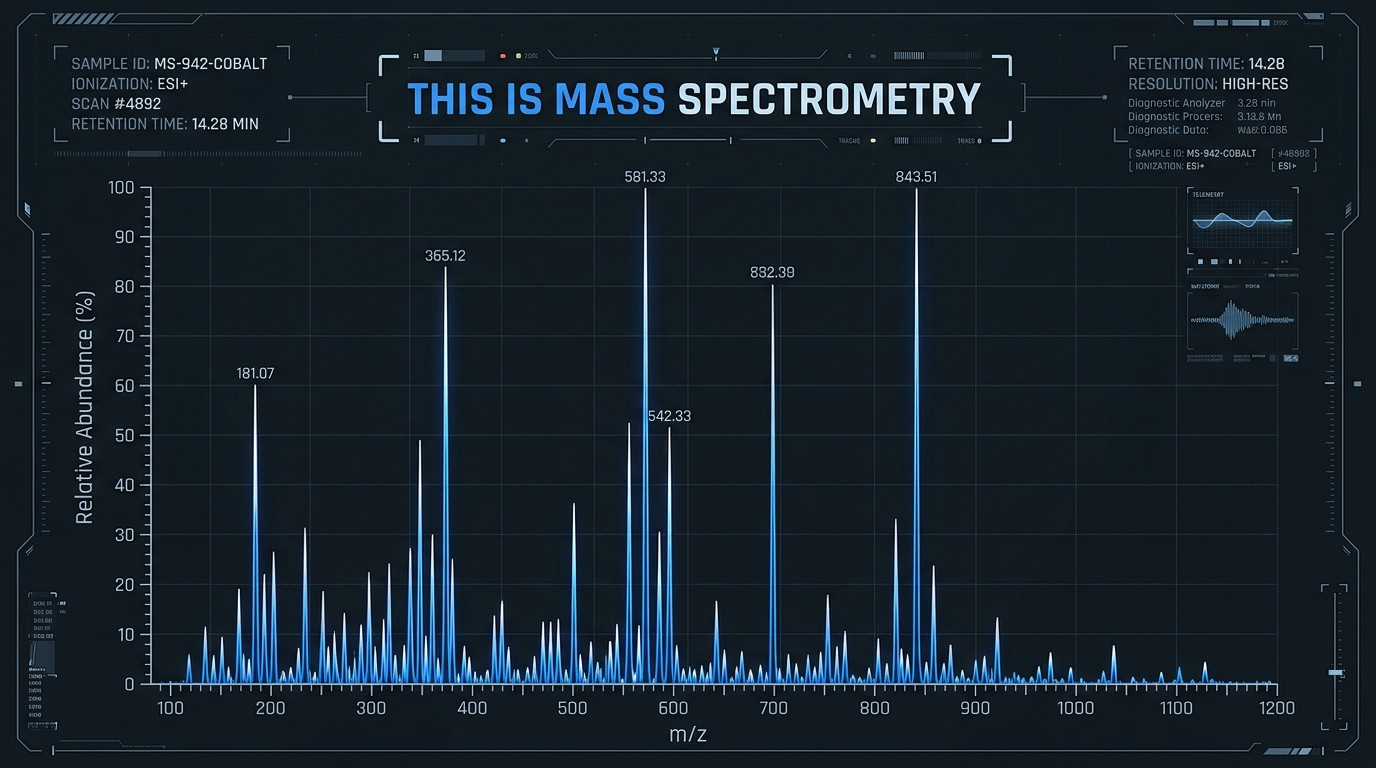
A mass-spectrometry report can provide important evidence about a peptide, but its conclusion depends on the experiment performed. A matching mass is informative; it is not always a complete structural identification.
USP’s work on peptide reference standards uses multiple approaches, including mass spectrometry and sequence-related characterization. That reflects a basic analytical principle: different methods address different parts of the identity question. USP reference standards for synthetic peptide therapeutics
Know which mass is being reported
An instrument measures ions. Reports may show mass-to-charge values, assigned charge states or a reconstructed neutral mass. These values should not be compared casually as if they were all the same measurement. The expected value also needs a stated chemical form and mass convention.
A reviewer should look for the sample identifier, acquisition method, relevant peaks and an explanation of how the conclusion was reached. An isolated screenshot with a single circled peak may omit information needed to evaluate competing interpretations.
Mass agreement has boundaries
Different structures can share the same overall mass. Sequence changes, stereochemical differences or unresolved impurities may require additional methods. Tandem mass spectrometry can add structural information, but the evidence should still be assessed for the particular analytical question.
A report supporting identity also does not automatically quantify content, establish sterility or exclude every contaminant. Those conclusions require their own measurements. The appropriate statement is therefore specific: the observed data support a defined identity assignment under the method used.
AXON recommends reading a mass report alongside the full analytical package and consulting a qualified analytical chemist when interpretation matters to an experiment. This article does not validate a particular certificate or supplier. Its purpose is to help readers recognize the difference between useful identity evidence and a claim that one graph proves everything about a material.
You might be wondering
Where this question leads.
Follow the source material.
Links are preserved from the supplied draft manuscripts. Linked sources may change. Regulatory wording needs a fresh specialist check before public launch.
Review required before wider publication
- Analytical mass-spectrometry specialist review required
