
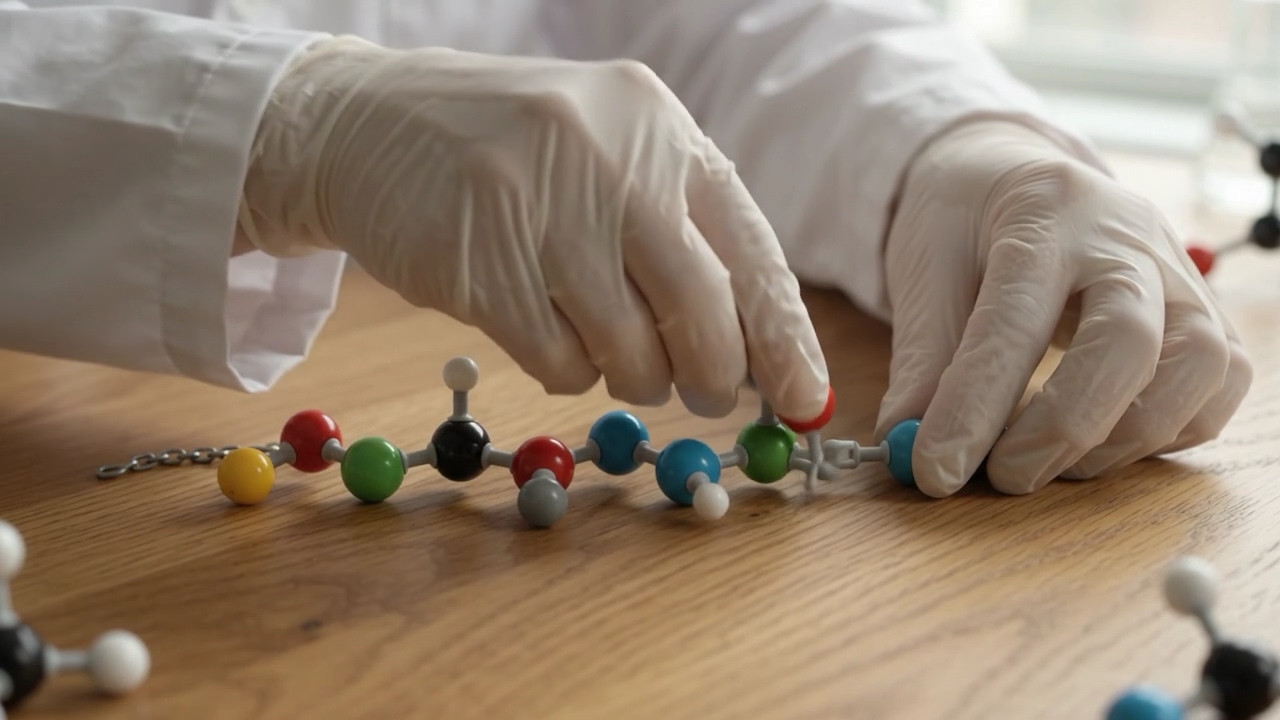
Two samples can contain similar-looking material while differing in important molecular details. Peptide characterization therefore asks both what is present and what else is present. An impurity result cannot substitute for an identity result, and identity alone does not describe every impurity.
What are peptide impurities?
Impurities may be related to the intended peptide or arise from the production process. Closely related substances can include altered or incomplete sequences and chemically modified forms. Other process-related components require different analytical attention. The relevant impurity profile depends on the molecule and manufacturing route.
For synthetic peptides used in medicinal-product development, EMA distinguishes peptide-related impurities from non-peptide impurities, including residual reagents, by-products and solvents. Its guideline calls for analytical methods suited to impurities that may arise from manufacture or degradation. This is a medicinal-product development and control framework, not certification of research reagents. EMA: Synthetic Peptide Impurities and Analytical Methods, sections 4.3.2 and 4.4.2
What is sequence verification?
Sequence verification investigates whether the amino acids occur in the intended order. Depending on the material, scientists may also need evidence about terminal modifications, disulfide connections, stereochemistry, or other structural features. A matching total molecular mass can be helpful, but different structures can sometimes share the same mass.
The logical distinction is simple: weighing a sentence would not tell you whether its words were in the correct order. Molecular measurements are much more sophisticated than that analogy, but the limitation explains why complementary evidence matters.
How does peptide mapping help?
In peptide mapping, a protein or suitable larger peptide is divided into smaller fragments in a controlled analytical procedure. Scientists separate and characterize the fragment pattern, often comparing it with a properly characterized reference. The resulting information can support identification and reveal differences. USP describes mapping as a comparative procedure, not merely a picture of peaks. USP General Chapter 1055: Peptide Mapping
Mapping is not automatically the best approach for every short peptide. The selected method must address the molecule's structure and the question being asked. A method that distinguishes two proteins may not resolve a particular closely related synthetic impurity.
Why characterization uses several questions
EMA's synthetic-peptide guideline distinguishes structural and physicochemical characterization, relevant biological characterization, identification, assay/content and impurity control. Sections 4.3–4.4 explain why complementary methods may be needed to establish sequence and detect impurities that one method cannot resolve. These are separate analytical questions, not interchangeable labels. The guideline concerns synthetic peptides used in medicinal products; citing it does not establish the quality or suitability of an unassessed research lot. EMA: Synthetic Peptide Characterization and Control, sections 4.3–4.4
A good report states what the tests support and what they leave unresolved. “Sequence confirmed” should be connected to the actual technique and acceptance criteria. It should not silently imply sterility, clinical safety, or regulatory approval.
You might be wondering
Where this question leads.
Original related-reading note
Related reading: Identity versus purity; Chromatography; Reference standards.
Follow the source material.
Links are preserved from the supplied draft manuscripts. Linked sources may change. Regulatory wording needs a fresh specialist check before public launch.
