
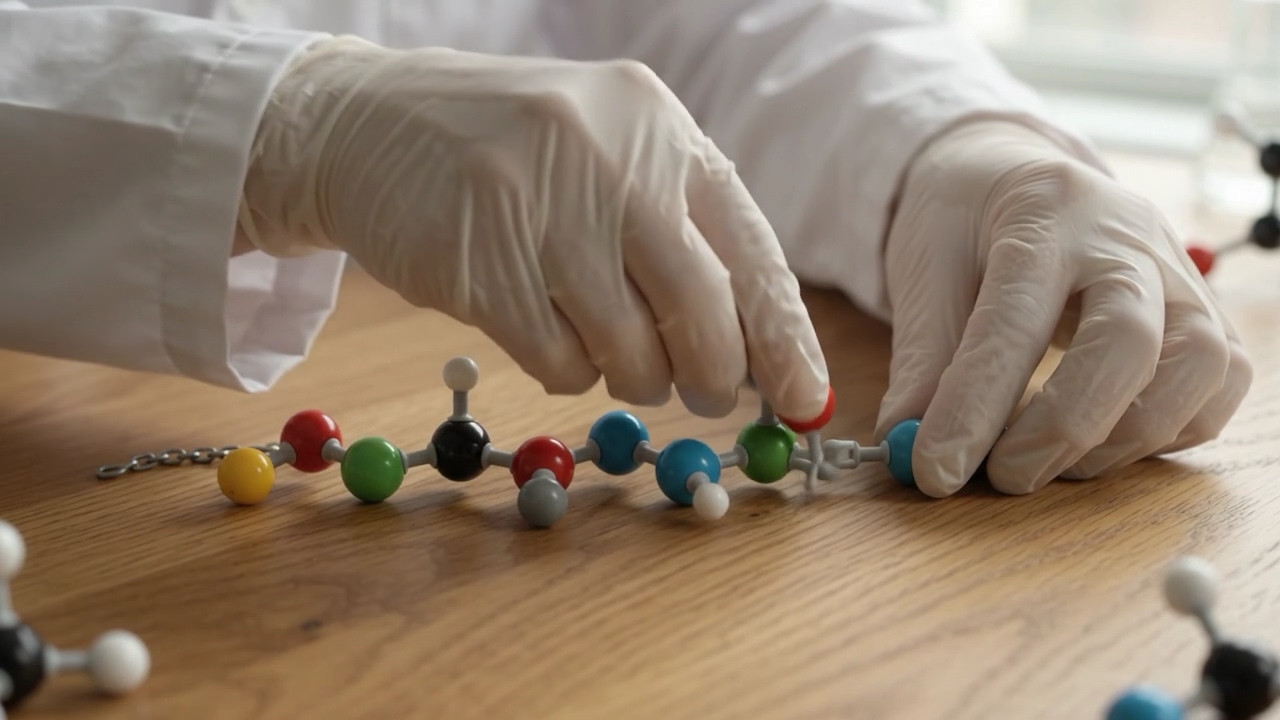
A peptide is a chain of amino-acid residues connected through peptide bonds. These are covalent amide linkages: the connection involves the carbonyl carbon of one unit and the nitrogen of another. IUPAC's definition emphasizes this chemical relationship. IUPAC: Peptides
Why order matters
The sequence is the order of the residues, not simply a list of ingredients. A chain containing the right building blocks in the wrong order is a different molecule. The ends of the chain and any additional chemical modifications also matter when defining the intended structure.
An analogy is a word: having the same letters does not establish that two words are identical. Analytical verification must address the relevant structure, not merely confirm that amino acids are present.
Why are protecting groups needed?
Amino acids can have more than one reactive site. During chemical synthesis, chemists use temporary protecting groups to manage which sites are available to react. They then remove the appropriate protection at a planned stage. This is a way to control selectivity, not a claim that unwanted reactions become impossible.
The Fmoc concept is one example. Its value comes from a pattern of chemical stability and removal that can be incorporated into a synthesis strategy. Different protection systems are chosen to work together; a group useful for one part of the molecule may not be suitable for another. Carpino and Han: Fmoc Protecting Group
What does peptide cleavage mean?
“Cleavage” means breaking a chemical linkage, but the meaning depends on context. In solid-phase manufacturing, it can refer to releasing the peptide from its temporary support. In analysis, deliberate cleavage can create smaller fragments that help scientists investigate structure. In degradation, bond breaking may be an unwanted change.
These uses should not be confused. Releasing a peptide from a support does not necessarily mean cutting its intended amino-acid chain into pieces. The process description should identify which bond or attachment is being changed. Merrifield's synthesis scheme illustrates the distinction between chain assembly on a support and final release. Merrifield: Solid-Phase Synthesis
Why this matters when reading quality claims
A correct manufacturing description is not a substitute for an analytical result. Knowing that a chemist used a recognized protecting group does not tell you whether the final material has the correct sequence or contains residual process-related substances. The route and the resulting lot both need evaluation.
This article explains chemical concepts only. It intentionally omits operating conditions, reagents, and step-by-step synthesis instructions.
You might be wondering
Where this question leads.
Original related-reading note
Related reading: SPPS and Fmoc; Purification and chromatography; Peptide mapping.
Follow the source material.
Links are preserved from the supplied draft manuscripts. Linked sources may change. Regulatory wording needs a fresh specialist check before public launch.
