
The short answer
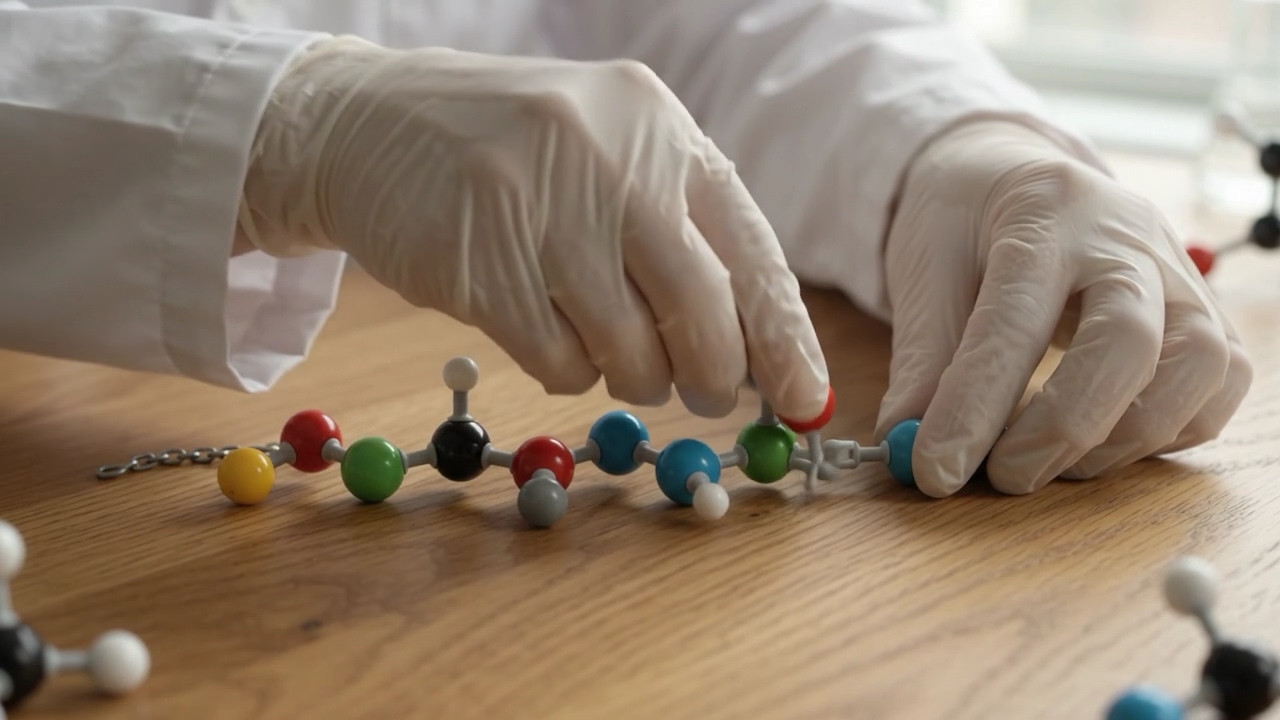
Peptides are molecules made from amino acids joined by peptide bonds. The term usually describes relatively short chains. Proteins are generally larger, folded molecules made from one or more amino-acid chains. Peptides and proteins belong to the same broad chemical family, but their length, shape and biological roles vary enormously. NHGRI: Peptide, NHGRI: Protein.
Are peptides amino acids?
Not exactly. An amino acid is a building unit; a peptide contains amino-acid residues connected in a particular order. “Residue” describes the part incorporated into the chain after a bond forms. A sequence of three residues is a tripeptide, while a two-residue sequence is a dipeptide. The sequence matters: rearranging the same building units can produce a different molecule with different properties.
The familiar set of amino acids used in human proteins is not the whole chemical universe. Researchers can also study modified residues and synthetic building units. This is one reason a label saying only “peptide” tells a reader very little about the actual substance. NHGRI: Amino Acids.
What is the difference between peptides and proteins?
Length is a useful starting point, not an absolute dividing line. Some educational sources use about 50 residues as a practical boundary. Scientific terminology also reflects structure, function and historical convention. A short molecule can adopt a defined shape, and a larger protein can include flexible regions. It is therefore misleading to claim that every peptide is small and simple or that every protein is a single rigid chain.
Peptide bonds connect the backbone, but side chains and other modifications influence charge, solubility, folding and interactions. Two sequences of similar length need not behave alike. IUPAC peptide terminology.
Why this distinction matters
Amino acids in food, a naturally produced signaling peptide and a prescription peptide medicine are not interchangeable products. They differ in formulation, exposure, evidence and intended use. Knowing that a molecule is assembled from amino acids does not establish that it can reach a particular tissue, perform a desired function or be used safely.
When reading an article or product description, ask for the exact molecular name and sequence or well-defined identity. Then ask what evidence exists for that specific material. The chemical category is the beginning of the explanation, not its conclusion.
Takeaway: Amino acids are the building units; peptides are connected chains; proteins are typically larger functional assemblies. None of those labels, by itself, proves a medical benefit.
You might be wondering
Where this question leads.
Original related-reading note
Related articles: F02, F03, A02.
Follow the source material.
Links are preserved from the supplied draft manuscripts. Linked sources may change. Regulatory wording needs a fresh specialist check before public launch.
