
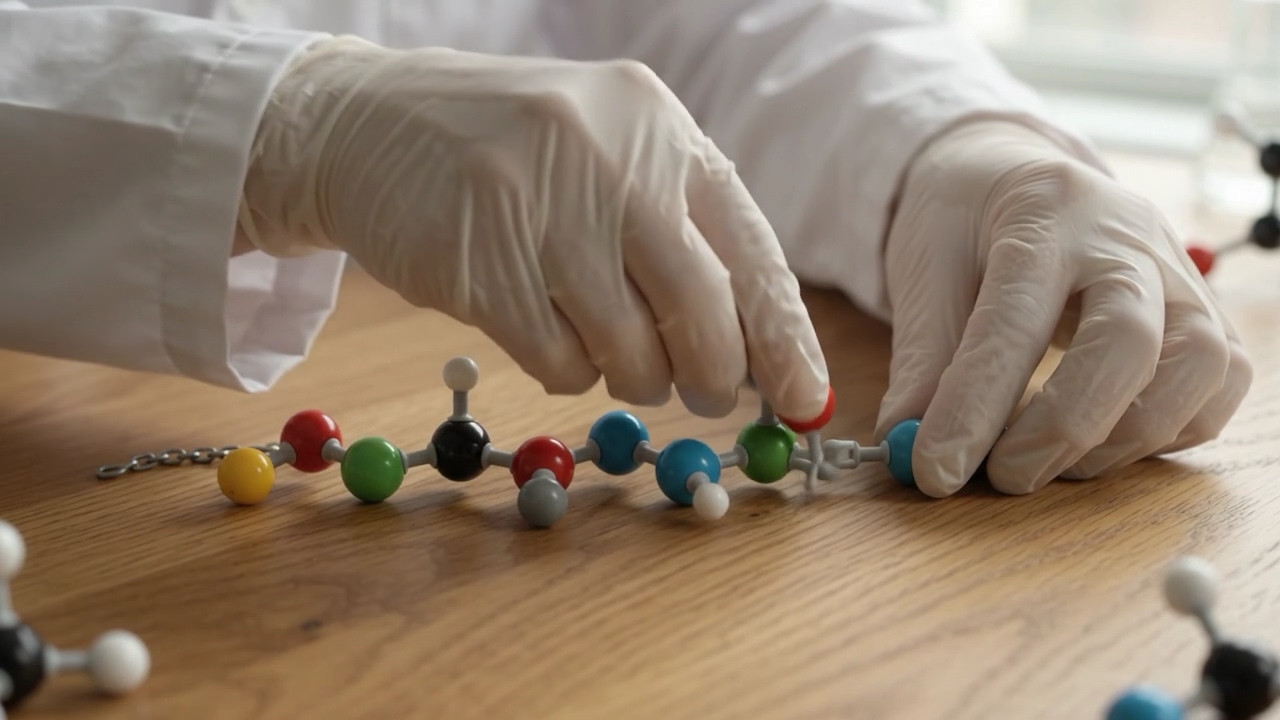
There is no single definitive count
Peptides can be classified by length, structure, origin, biological function or research application. These categories overlap. A molecule can simultaneously be a naturally occurring peptide, a hormone and a cyclic structure. Synthetic chemistry also allows new sequences and modifications, so there is no useful universal answer such as “there are exactly ten types.”
A practical library should explain its classification system. Categories such as metabolic signaling, neuropeptides and analytical standards describe different aspects of the subject. They should not imply that every member shares the same evidence, legal status or effect.
The National Library of Medicine's vocabulary includes peptide hormones, neuropeptides, antimicrobial peptides, cyclic peptides and many other groupings. It is a way to organize research, not a complete count of every possible molecule. NLM peptide classifications.
Are peptides hormones?
Some are. A hormone is a signaling molecule defined by its role in communication, while a peptide is defined by chemical structure. The terms answer different questions. Insulin and glucagon are familiar peptide hormones; other peptides have nonhormonal roles. Hormones also include substances that are not peptides. NLM: Peptide hormones.
This distinction helps interpret phrases such as “hormone peptide.” It identifies a particular overlap, not a property shared by every peptide. Likewise, a peptide studied in a laboratory does not become a hormone merely because it affects a hormone-related pathway.
Are peptides steroids?
Peptides and steroids are different chemical classes. Peptides contain amino-acid chains. Steroids have a characteristic fused-ring structure. Some steroids are hormones, and some peptides are hormones, but sharing a signaling role does not make their structures interchangeable. IUPAC: Steroid terminology.
“Anabolic” describes a process that builds larger molecules or tissues; it is not another word for steroid. A substance may influence growth or metabolism without being an anabolic-androgenic steroid. At the same time, being “not a steroid” does not establish that a substance is safe, approved or permitted in sport.
A better way to read a category label
Ask what the label is describing: molecular structure, natural function, proposed use or marketing position. Then locate the exact compound and evidence. “Recovery peptide” and “longevity peptide,” for example, are often purpose-oriented descriptions rather than formal scientific classifications.
Takeaway: Peptides are a broad chemical family. Some act as hormones; they are not steroids. The exact compound and research context matter more than a broad category label.
You might be wondering
Where this question leads.
Original related-reading note
Related articles: F02, S05.
Follow the source material.
Links are preserved from the supplied draft manuscripts. Linked sources may change. Regulatory wording needs a fresh specialist check before public launch.
