
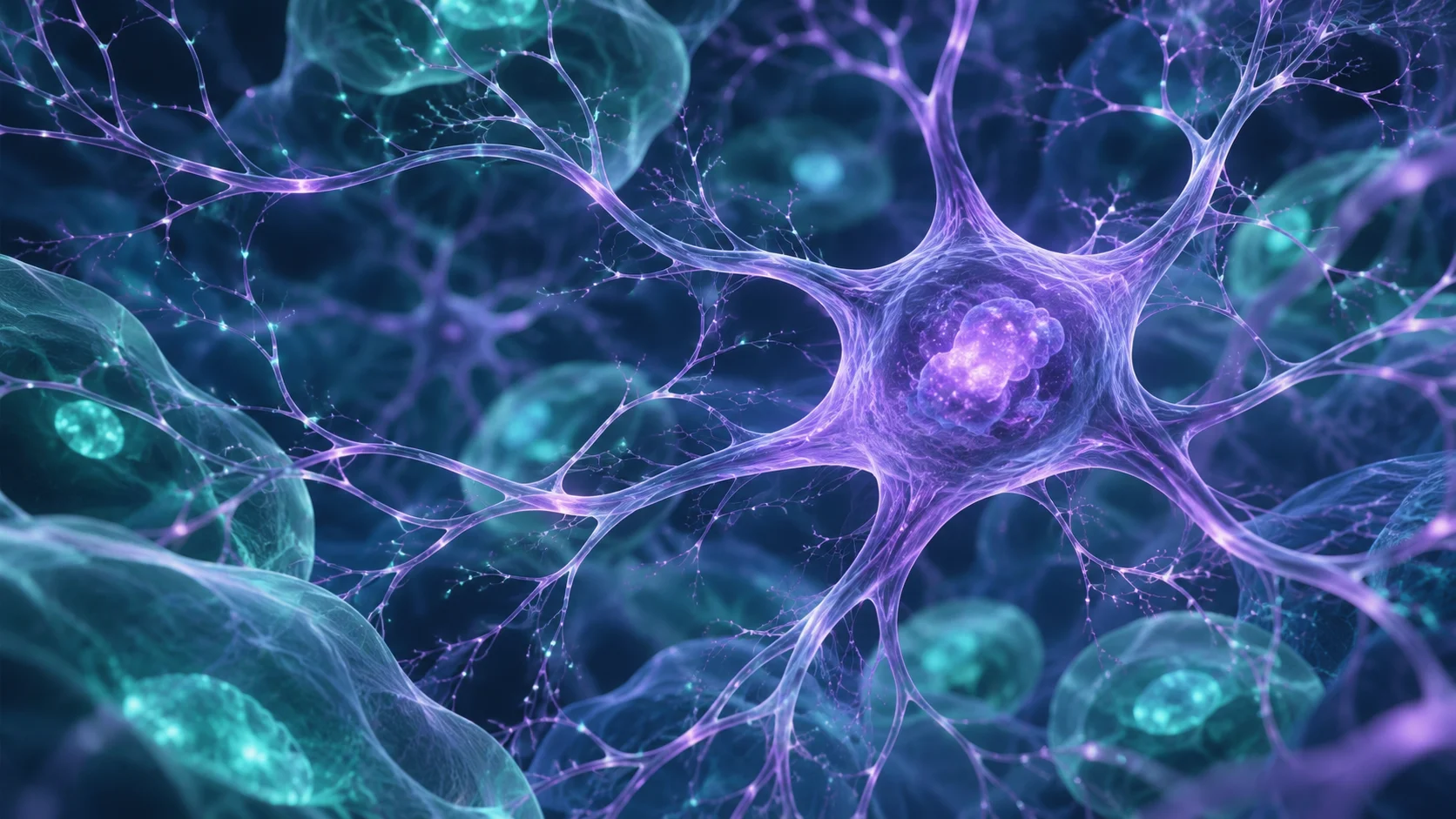
Neuroplasticity is the nervous system’s capacity to change its structure or function in response to activity, experience, development or injury. It includes several processes, from changes in the strength of individual synapses to altered organization across networks.
Plasticity does not always mean growing new neurons
A connection can become more or less effective without a new neuron appearing. Cells may alter receptor numbers, electrical responsiveness or the organization of their connections. These changes help support learning and adaptation, but the exact mechanism depends on the context.
Classic experiments in rabbits demonstrated persistent changes in synaptic responses after particular patterns of stimulation. This phenomenon, long-term potentiation, became an important model for investigating how experience can leave a lasting physiological trace. It did not by itself explain every form of human memory. Bliss and Gardner-Medwin, 1973
Change can be helpful or unhelpful
“Plastic” does not automatically mean “better.” A network can adapt in ways that support recovery, or in ways that reinforce an unwanted response. A change in brain activation also may reflect compensation rather than restoration of the original function.
This is why rehabilitation studies assess actual performance and everyday function instead of relying only on a scan or molecular marker.
Why neuroplasticity claims need an outcome
A product described as “increasing neuroplasticity” should be evaluated by asking what changed, how it was measured and whether the change improved a meaningful outcome. A cellular experiment showing altered signaling is not proof of better learning in a person.
Neuroplasticity is established biology, not a guarantee of unlimited recovery or effortless self-improvement. Its practical importance comes from studying which experiences and interventions produce useful, durable changes under defined conditions.
You might be wondering
Where this question leads.
Original related-reading note
Related reading: N09, N12, N13.
Follow the source material.
Links are preserved from the supplied draft manuscripts. Linked sources may change. Regulatory wording needs a fresh specialist check before public launch.
