
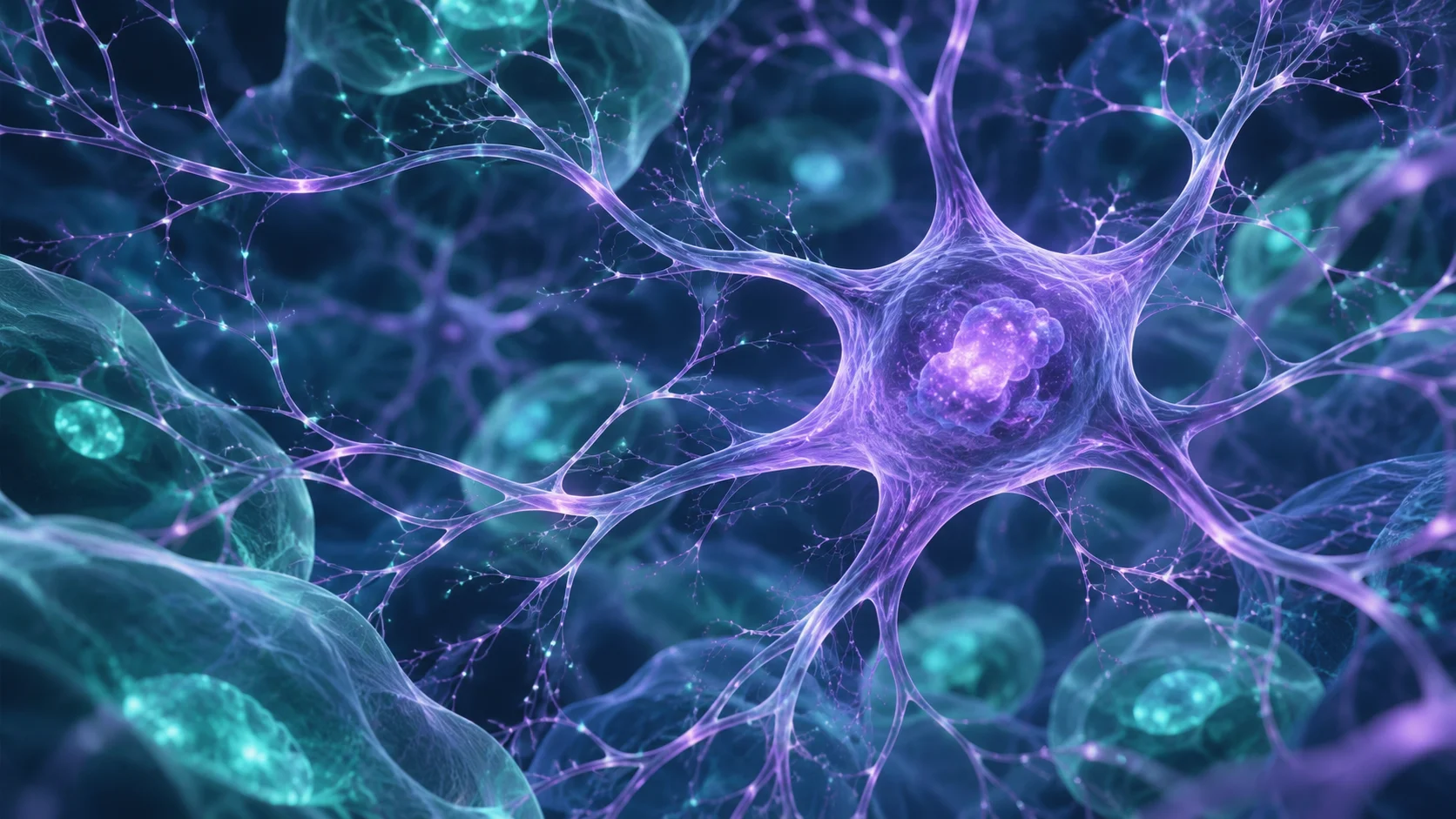
A synapse is a specialized connection through which one cell influences another. At a chemical synapse, an electrical signal arriving at a nerve terminal can trigger release of a chemical messenger. That messenger interacts with receptors on the receiving cell and changes its behavior.
The basic sequence
An arriving signal alters the electrical state of the terminal. Calcium entry helps trigger vesicles to release their contents. The released messenger reaches receptors, which can affect ion flow directly or activate slower internal signaling pathways. The signal is then limited by processes such as removal, recycling or breakdown. NCBI Bookshelf: Synaptic transmission
This sequence is highly regulated. Cells control how much is released, where receptors are located and how strongly the receiving cell responds. A synapse is therefore an adaptable communication point, not a fixed electrical wire.
Excitation and inhibition work together
Some signals make a neuron more likely to fire, while others make firing less likely. The final response reflects many inputs arriving across time and space. An increase in one signal does not necessarily increase overall brain activity or improve function.
Peptides can modulate these interactions, sometimes over longer time scales and broader areas than a fast transmitter. Electrical synapses, which use direct cellular connections, provide another form of communication and remind us that not every synapse uses the same mechanism.
Why this matters for research claims
A compound might alter transmitter release, receptor activity or signal removal. Each is a different mechanism and can have different consequences in different circuits. The phrase “improves communication between neurons” needs evidence of a useful outcome, not only a change in a laboratory signal.
Understanding synapses helps explain both normal learning and why changing brain chemistry is rarely a simple matter of increasing one messenger.
You might be wondering
Where this question leads.
Original related-reading note
Related reading: N02, N07, N08.
Follow the source material.
Links are preserved from the supplied draft manuscripts. Linked sources may change. Regulatory wording needs a fresh specialist check before public launch.
